

D&D World of Warcraft Review: Epic Loot Beneath the Grind
As an Amazon Associate I earn from qualifying purchases.

Review Score: 15 out of 20
Pros
- The 13 WoW “classes” are clever mash-ups of existing D&D 5.5E classes, subclasses and feats, with standouts like the Oath of the Ebon Blade Death Knight.
- The new Professions system is the best set of crafting rules WotC has printed for 5E, and it’s easy to lift into any campaign.
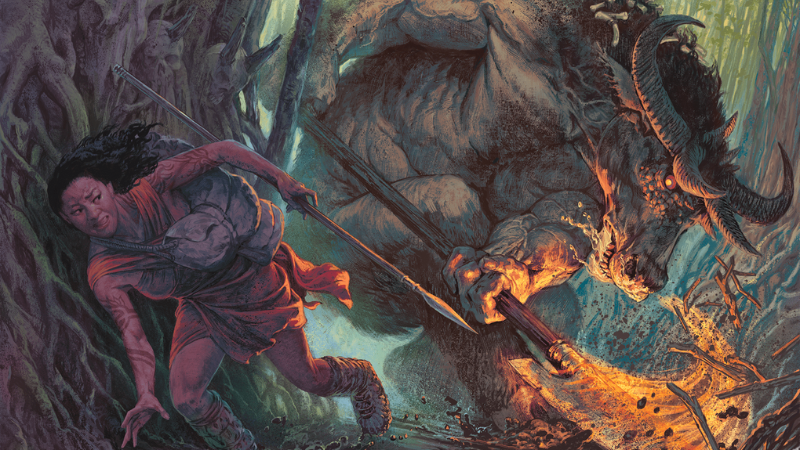
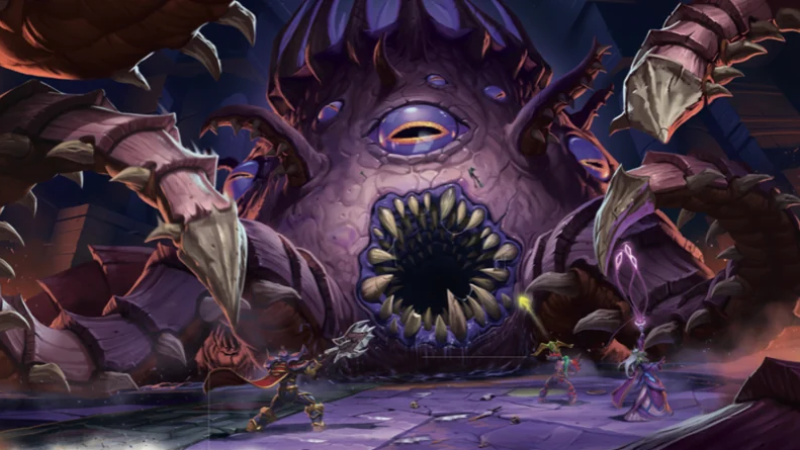
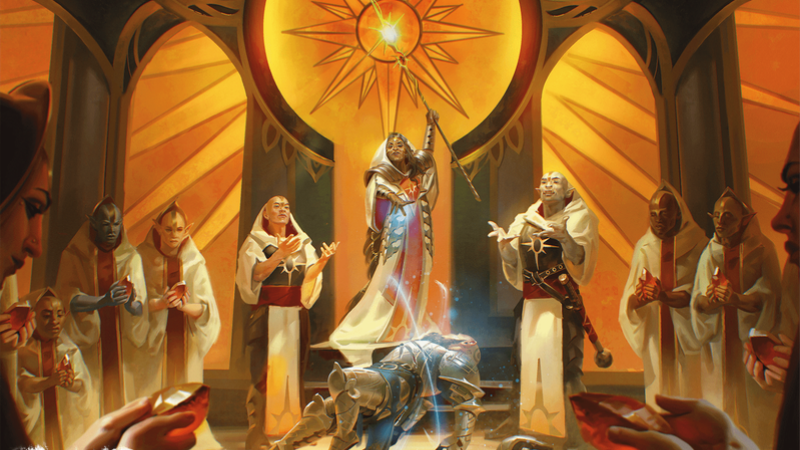
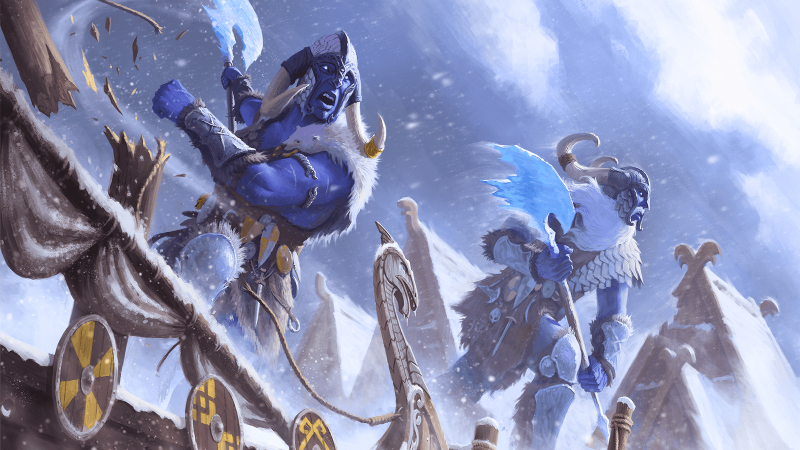
- The incredible artwork makes this one of the best-looking D&D books ever published.
- The seven dungeons feature multi-phase boss fights that capture the feel of an MMO raid at the table.
Cons
- Lore is badly glossed over, with the 20-page Azeroth chapter buried after more than 120 pages of rules.
- Five of the 16 species (Dwarf, Elf, Gnome, Human and Orc) mostly just point you back to the Player’s Handbook.
- At 256 pages, it tries to be a player’s guide, a setting guide, an adventure anthology and a bestiary all at once, and is stretched thin as a result.
- Some MMO-isms, like assigning level ranges to entire regions, don’t translate well to the tabletop.

I’ll be upfront: I’ve never played World of Warcraft. Despite being a massive video game and fantasy nerd, I somehow managed to dodge the MMO that ate up so many of my friends’ weekends in the 2000s. So I came into Dungeons & Dragons World of Warcraft as exactly the kind of reader I assumed it was trying to win over: a lifelong D&D player curious about whether Azeroth was worth a trip through the Dark Portal.
What I found was a gorgeous, ambitious and frustratingly inconsistent book. On one page, D&D WoW delivers some of the most interesting design work WotC has done for D&D in years. On the next, it repurposes existing content from the 2024 Player’s Handbook or leaves most of the heavy lifting to DMs. And the more I read, the more I realized this book isn’t really written for me. It’s written to try and bring legions of WoW fans into D&D 5.5E.
That’s not necessarily a bad thing, and even if you don’t know a Dracthyr from Draenor there’s still plenty here worth stealing for your campaign. That being said, if you’re a D&D player who’s never set foot in Azeroth, I’m not convinced there’s enough here to draw you in. Of course, you’ll. be able to make that decision for yourself soon as the book will be officially released on November 17, but is available for pre-order now from local game stores, D&D Beyond and Amazon.
So is D&D WoW worth picking up? Below is my complete review.

Table of Contents
- Introduction
- What’s included in the book?
- What are the new classes like?
- What are the new species like?
- What are the crafting rules like?
- What are the factions and renown rules like?
- How does the book handle Azeroth’s lore?
- What are the adventures and dungeons like?
- What is the bestiary like?
- Who is this book actually for?
- What is the art and design like?
- When will D&D World of Warcraft be released?
- How much is D&D World of Warcraft?
- Is there an alternate cover?
- What tie-in products are there?
- Final thoughts

What’s included in D&D World of Warcraft?
D&D World of Warcraft is a 256-page hardcover split into an introduction and seven chapters. Much like Alustriel Silverhand in Arcana Unleashed, the whole thing is framed by a narrator: in this case Chromie, a time-hopping member of the bronze dragonflight, who presents the book as a separate “what-if” timeline that you’re free to make your own (which feels a smart move on WotC’s part to appease WoW lore hounds).
The chapters are as follows:
- Chapter 1: Character Classes: Guidelines for building all 13 WoW classes using D&D 5.5E classes, plus new subclasses, spells and feats.
- Chapter 2: Character Origins: 16 species, plus new Azeroth-specific languages.
- Chapter 3: Professions and Gear: Gathering and production professions, mounts, vehicles, companion creatures and magic items.
- Chapter 4: Factions and Renown: The Alliance, the Horde and 23 subfactions, each with their own renown perks.
- Chapter 5: The World of Warcraft: A 20-page overview of Azeroth’s cosmology and regions.
- Chapter 6: Adventures in Azeroth: Six major conflict arcs for building campaigns, plus seven dungeons.
- Chapter 7: Bestiary of Azeroth: 31 monster entries, including stat blocks for iconic characters like Thrall, Jaina Proudmoore and Illidan Stormrage.
Chapters 1 through 3 are aimed at players, while chapters 4 through 7 are mostly for the DM. If you’re a WoW fan who’s new to D&D, it’s also worth noting that you will need the 2024 Player’s Handbook and Dungeon Master’s Guide to use the supplement.

What are the new classes like?
Let’s start with my biggest pet peeve, which is more about naming than mechanics. The book bills these as the “13 World of Warcraft classes,” but none of them are actually new D&D classes. Each one is a recipe: pick a base class from the Player’s Handbook, pick a subclass (sometimes new, often not) and then follow the suggested Weapon Masteries, feats and spells for one of 40+ “specializations.” In D&D terms, these are builds. Calling them classes is going to confuse new players the moment they open the Player’s Handbook and see that there’s no such thing as a Hunter or a Shaman, and it sets the wrong expectation for veteran D&D players hoping for 13 brand new classes.
Naming aside, the actual mechanics are mostly cool. The Death Knight is the clear highlight. It uses the Paladin class with the new Oath of the Ebon Blade subclass, which (unusually) rewrites core Paladin features starting at level 1, and lets you inscribe Blood, Frost or Unholy runes on your weapon to pick your specialization. It’s one of three “Hero Classes” (along with the Demon Hunter and Evoker) that are meant to start play at level 3 or higher, which is a cool concept.
Some of the base class choices are odd, though. The Shaman, a caster in WoW, is built on the Barbarian chassis, with new Totems replacing Primal Knowledge. The Demon Hunter is a Ranger. The Subtlety Rogue uses the psionic Soulknife subclass. And the Evoker is a Draconic Sorcery Sorcerer that can only be played by a Dracthyr. I understand the logic in each case, but they’re the kind of square-peg, round-hole choices that come from forcing one system’s archetypes into another’s.
The amount of new material per class is also all over the map. The Death Knight, Demon Hunter and Evoker get loads of new features and spells. The Priest gets two new subclasses (Discipline and Shadow Domain). Other “classes” like the Rogue or Warrior get a handful of new options and are otherwise pointed toward subclasses you already own. If you’re expecting every WoW class to feel distinct at the table, you’ll be disappointed by about half of them.

What are the new species like?
The book includes 16 playable species, and this is where the book’s inconsistency really shows. The new options are genuinely interesting. The Earthen (titan-forged beings of living stone infused with Azerite) can swap an attack for a cone of radiant energy that damages enemies and heals allies in the same breath. The Dracthyr, Pandaren, Tauren, Vulpera and Worgen are all fun additions that don’t have a direct equivalent in the Player’s Handbook.
But then you get to the Dwarf entry. After a full page of rich lore on the Bronzebeard, Dark Iron, Wildhammer and Frostborn clans, the mechanics are a single sentence: “You have the Dwarf species traits from the Player’s Handbook.” That’s it. The Human and Orc get the same treatment (the Human at least gets a few nation-themed Origin feats), and the Gnome uses the Rock Gnome lineage unless you’re playing a Mechagnome. The Elf fares a bit better, with new lineages for Azeroth’s five elf peoples, but it’s still built on the PHB chassis.
I get that there’s no reason to reinvent the dwarf. But WoW’s dwarves are descended from titan-forged earthen afflicted by an Old God’s curse, and the book spends a page telling you so. It feels lazy to then make them mechanically identical to a Forgotten Realms shield dwarf. If the lore is different, at least some of the mechanics should be too. It’s the clearest example of a book that ran out of room (or time) to do what it set out to do.

What are the crafting rules like?
This is where the book really shines. Crafting has always been one of the weakest parts of 5E. The core rules basically amount to “pay half the price and wait a very long time,” and most tables quietly ignore them. D&D World of Warcraft builds on those rules with a full Professions system that I’d happily use in any campaign, Azeroth or not.
The concept is simple. Your tool proficiencies unlock Gathering Professions (like Herbalism, Mining and Skinning) and Production Professions (like Alchemy, Blacksmithing and Enchanting). Your Proficiency Bonus determines your Proficiency Level, from Apprentice (+2) to Master (+6), which in turn caps the rarity of magic items you can make. Resources are measured in gold pieces, so a DM can keep things abstract (“you’ve gathered 50 GP of herbs”) or get granular with named recipes and ingredients.
What I like most is that it turns crafting into adventure hooks. High-end recipes need rare resources from specific regions or other planes, and the best recipes can only be earned as treasure or faction rewards. That gives players a reason to go places, instead of just a reason to sit in town. It also plugs neatly into the renown system, which is a nice bit of design. The book does admit that listing specific resources and recipes is “beyond the scope of this book,” which means DMs who want a crunchier system will need to do some homework. But as a lightweight framework, it’s excellent.
The rest of the chapter covers mounts (including some delightfully goofy engineered vehicles like the Goblin Trike and Mekgineer’s Chopper), companion creatures and new magic items. It’s all solid and fun, if not essential.

What are the factions and renown rules like?
Chapter 4 expands on the optional renown rules from the 2024 Dungeon Master’s Guide, covering the Alliance, the Horde and 23 subfactions ranging from Stormwind and Orgrimmar to the Kirin Tor and the Argent Dawn. Most species give you a starting Renown Score of 3 with one faction, and climbing through the Friendly, Honored, Revered and Exalted tiers unlocks discounts, training, Blessings and loaned gear.
The perks are tangible and often tie back into the crafting system. Reach Honored with Ironforge, for example, and the time it takes you to craft an item with Blacksmithing is cut in half. Hit Revered and you can borrow a dwarven relic for a quest (with a renown penalty if you don’t give it back). It’s a great way to make the abstract idea of “reputation” feel rewarding, and it’s a clear improvement on the bare-bones rules in the DMG.
That said, this is also where the book’s attempts to gamify D&D start to show. Renown tiers with names like “Exalted” will feel like home to MMO players, but there’s a real risk of this turning into a reputation grind at the table, which the book itself warns DMs to avoid in Chapter 6.

How does the book handle Azeroth’s lore?
This is my biggest issue with the book. World of Warcraft has more than 20 years of story behind it (plus the Warcraft strategy games before that), and the book openly admits it “only scratches the surface.” That’s an understatement. As someone who doesn’t know the setting, I felt lost for a lot of my read-through.
Chapter 5, the actual overview of Azeroth, is just 20 pages. And most of that is a gazetteer of regions in Kalimdor, the Eastern Kingdoms, Northrend and the various islands, each with a sentence or two of description. The cosmology gets a few pages (the titans, the Light and the Void, the Old Gods), but the actual history of the world is compressed into a handful of paragraphs. Events like the War of the Ancients, the Great Sundering and the Third War get name-dropped throughout the book as if you should already know what they are. Most of the real history is scattered across the species entries in Chapter 2, which means you’re piecing the timeline together from the dwarf, orc and human write-ups.
The placement doesn’t help either. You have to get through more than 120 pages of classes, species, professions and faction perks before the book explains what Azeroth even is. For anyone new to the setting, it should have been Chapter 1. Instead, the introduction points readers to the four-volume World of Warcraft: Chronicle series and to fan-made wikis to fill in the gaps. That’s a fine recommendation, but it’s a strange thing for a $60 setting book to outsource.
The book’s attempts to translate MMO conventions also don’t always land. Every region in Chapter 5 is tagged with a tier of play, so Durotar and Elwynn Forest are for levels 1–4, while Ahn’Qiraj is for levels 17–20. That makes total sense in a video game with zone progression, and the book does say DMs can ignore it. But it’s the kind of simplification that works against how D&D plays. Nobody labels Waterdeep as a “level 1–4 zone.” Places in a tabletop world are dangerous because of what’s happening there, not because of a number on a map, and stamping level ranges on entire regions makes Azeroth feel more like a game board than a living world.

What are the adventures and dungeons like?
Chapter 6 opens with some genuinely useful advice on adapting an MMO to the tabletop (avoid the grind, give characters a chance to make a real difference in the world, and remember that D&D characters can’t respawn and rest between every boss). It then outlines six major conflicts (the Alliance and the Horde, the Burning Legion, the Dragonflights, the Elemental Lords, the Old Gods and the Scourge), each with a loose campaign arc broken down by tier of play.
***** MINOR SPOILERS BELOW *****
The rest of the chapter presents seven iconic WoW dungeons:
- Deadmines (Levels 1–4)
- Shadowfang Keep (Levels 1–4)
- Blackfathom Deeps (Levels 5–10)
- Scarlet Monastery (Levels 5–16)
- Dire Maul (Levels 11–16)
- Azjol-Nerub (Levels 17–20)
- Onyxia’s Lair (Levels 17–20)
The best part of these is the boss design. Many bosses transform or revitalize mid-fight, recreating the multi-phase raid encounters WoW players know. Onyxia, for example, starts on the ground, takes to the air when Bloodied while her whelps hatch around the party, then tries to escape through a secret exit. It’s a fun, cinematic way to make a boss fight feel like an event, and it’s an idea I’d steal for any campaign.
The problem is that these dungeons are short. Seven dungeons share about 50 pages, with most getting six to eight pages and Onyxia’s Lair getting just two. The book itself describes them as “less detailed than you’d find in a dedicated adventure product but more fleshed out than a simple adventure site,” which is about right. These are adventure locations to build sessions around, not adventures unto themselves.
***** END OF SPOILERS *****

What is the bestiary like?
Chapter 7 covers 31 entries, ranging from murlocs, quilboar and furbolgs to demons of the Burning Legion and all five ordered dragonflights. It also includes stat blocks for WoW’s biggest characters, including Thrall, Jaina Proudmoore, Sylvanas Windrunner, Illidan Stormrage, Anduin Wrynn, Ragnaros and the Lich King Arthas, so your players can fight alongside (or against) them.
It’s a solid chapter, but it’s also where you notice how familiar a lot of Azeroth is. Undead abominations, felhounds, imps, pit lords, satyrs, naga and spider-like nerubians all have obvious D&D counterparts. They’re well done, but for a D&D player, few of them feel like something you haven’t fought before.

Who is this book actually for?
This is the question I kept coming back to. The first section of the introduction is literally titled “What Is D&D?” and explains what a Dungeon Master is, complete with a sample of play. The character creation section suggests Alliance characters tend toward Lawful Good and Horde characters toward Chaotic Good. The class chapter tells you exactly which D&D options will let you “re-create the fury warrior you play in the MMO.” Everything about the book’s framing assumes you know WoW and are new to D&D.
And that’s fine. Bringing millions of WoW fans to the tabletop is a smart goal for WotC. But it leaves D&D players like me in an awkward spot. The book assumes I know the lore, while explaining rules I already know. The result is that neither audience gets everything it needs.
I think the root of the problem is that this should have been at least two books. WotC already took this approach with the Forgotten Realms in 2025, splitting player options into Heroes of Faerûn and DM content into Adventures in Faerûn. A WoW player’s guide (classes, species, professions) and a separate setting and adventure book (lore, factions, regions, dungeons, bestiary) would have given each half room to breathe. Better yet, a third book of full-length adventures would have let those iconic dungeons become actual campaigns. As it stands, D&D World of Warcraft tries to do too much in too little space, and it shows.

What is the art and design like?
Not surprisingly given WotC’s reputation, the art is incredible. I found myself stopping to stare at nearly every page and it genuinely got me excited and interested in learning more about the world and character. The illustrations do a great job of bringing the world of Azeroth to life.
The writing is clear and readable, the layout is solid and the maps are some of the best WotC has produced in years. Visually and structurally, this book is a knock out.

When will D&D World of Warcraft be released?
D&D World of Warcraft will be available to the general public on November 17th, 2026. If you pre-ordered from D&D Beyond or a local game store participating in the early release program, you can get your hands on it as of November 3rd, 2026. For some stores, however, things might be a little late, as there have been some shipping delays.
The book is also the anchor product for the D&D Season of Champions, which connects new books, tie-in products and community events around a central theme.

How much is D&D World of Warcraft?
The physical hardcover retails for $59.99 USD (not including shipping and handling), while the D&D Beyond digital version retails for $39.99 USD. You can also purchase a digital + physical bundle for $79.99 USD. That pricing is in line with Ravenloft: The Horrors Within, though it’s $10 more than Arcana Unleashed.

Is there an alternate cover available?
Yes. There are actually two alternate versions. The first is a standard “hobby” alternate cover, which retails for the same price as the regular version and is available at local game stores. There’s also a Collector’s Edition that features the symbol of the Alliance on one side and the Horde on the other.

What other tie-in products are there?
In addition to the main sourcebook, Wizards of the Coast will also be releasing:
- Map Pack: Available in physical and digital versions (for use with D&D Beyond Maps), it also includes a code for a level 16–20 adventure set in Icecrown Citadel featuring a dozen high-level bosses.
- DM Screen: Featuring new art on the front and reference tables for running a WoW campaign on the back.
- Miniatures: Two sets of new minis, developed by Hasbro rather than WizKids.

Final thoughts
Here’s the thing about D&D World of Warcraft: it’s really WotC’s attempt to convert WoW fans into D&D players. And on that front, it probably works. If you’ve spent years in Azeroth and want to explore it at a table with friends, this book gives you everything you need to recreate your favorite class, join your favorite faction and roll some dice.
But if, like me, you’re a D&D player who’s new to Azeroth, I don’t think there’s enough here to lure you away from the Forgotten Realms, Eberron, your homebrewn setting or any of the game’s other established settings. The lore is cool, but it’s also not radically different from what D&D already offers: elves, dwarves, goblins, undead, demons and dragons. And with so much of it glossed over or left to fan wikis, I’m not sure the book does enough to make D&D fans who’ve never played the MMO want to go down the rabbit hole.
That’s a shame, because when this book is good, it’s really good. The crafting rules are the best WotC has printed for 5E, the art is spectacular, the Death Knight is a blast and the multi-phase bosses are a great idea. But for every page of novel design, there’s another that recycles material you already own or squeezes 20 years of story into a paragraph. It feels like a book that should have been two or three books, and it’s stretched thin trying to be all of them at once.
In the end, it’s a must-buy for WoW fans curious about D&D, and worth flipping through for D&D fans. The world of Azeroth is waiting. It just might not be for everyone.
D&D World of Warcraft is available now through early access, with a general release on November 17th, 2026. You can order it now from your local game store, D&D Beyond and Amazon.

A review copy of D&D World of Warcraft was provided by Wizards of the Coast
See Our Complete D&D Book Coverage
Visit our D&D Books page for more reviews of the latest novels and game books.
Subscribe to D&D Fanatics
Get exclusive D&D news, reviews and rules updates delivered right to your inbox.

Jason Volk is the Publisher of Dungeons & Dragons Fanatics and lives in the wilds of Western Canada. He has been playing D&D for over 25 years and is a huge fan of Dragonlance and the Forgotten Realms. His favorite character of all time was a Necromancer named Neek who spent most of his adventuring career resurrecting the corpses of slain monsters. When he’s not playing TTRPGs, Jason enjoys video games, Magic: The Gathering, Warhammer 40K, watching football and spending time with his wife and adorably nerdy children.
Follow him on Bluesky or on Instagram